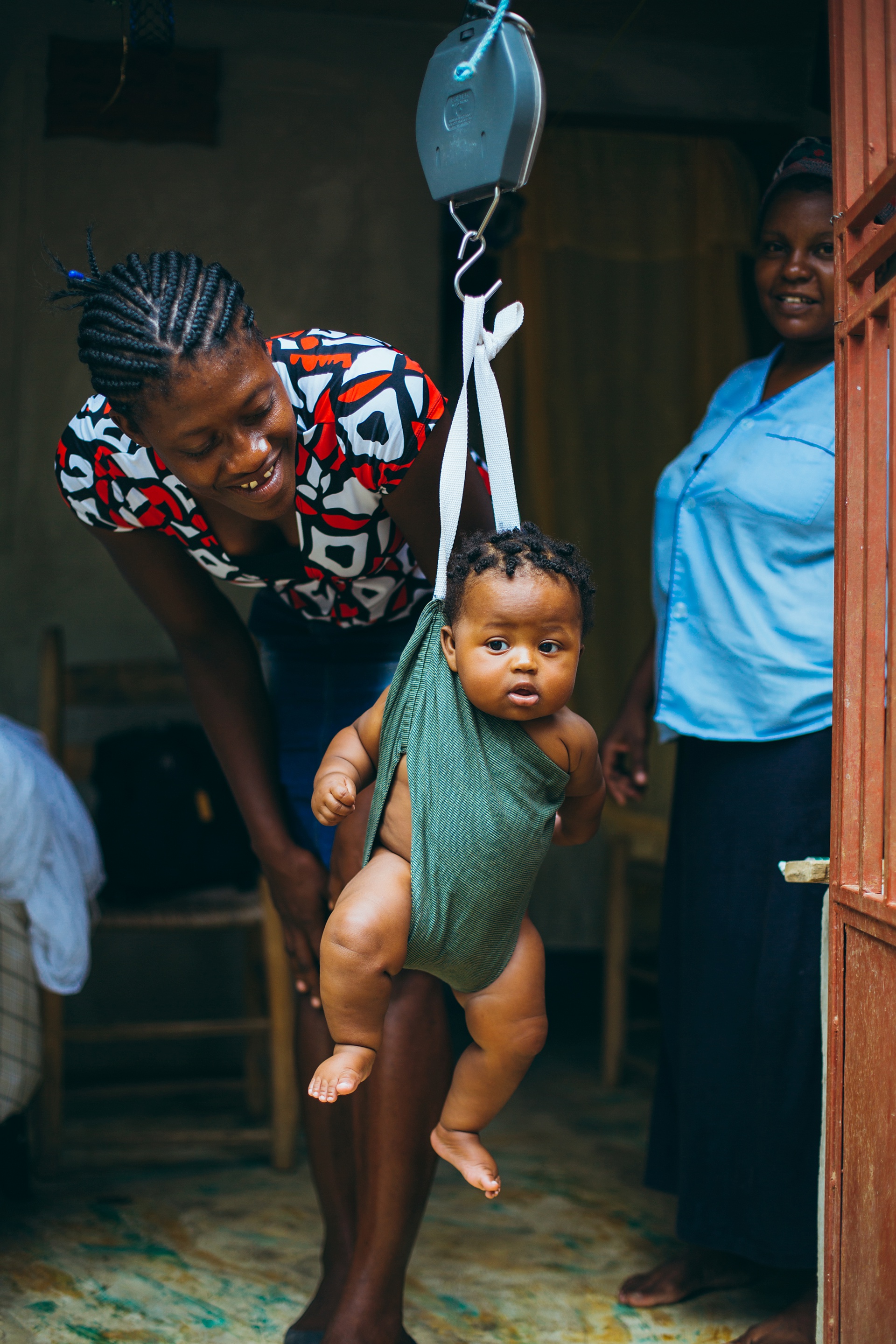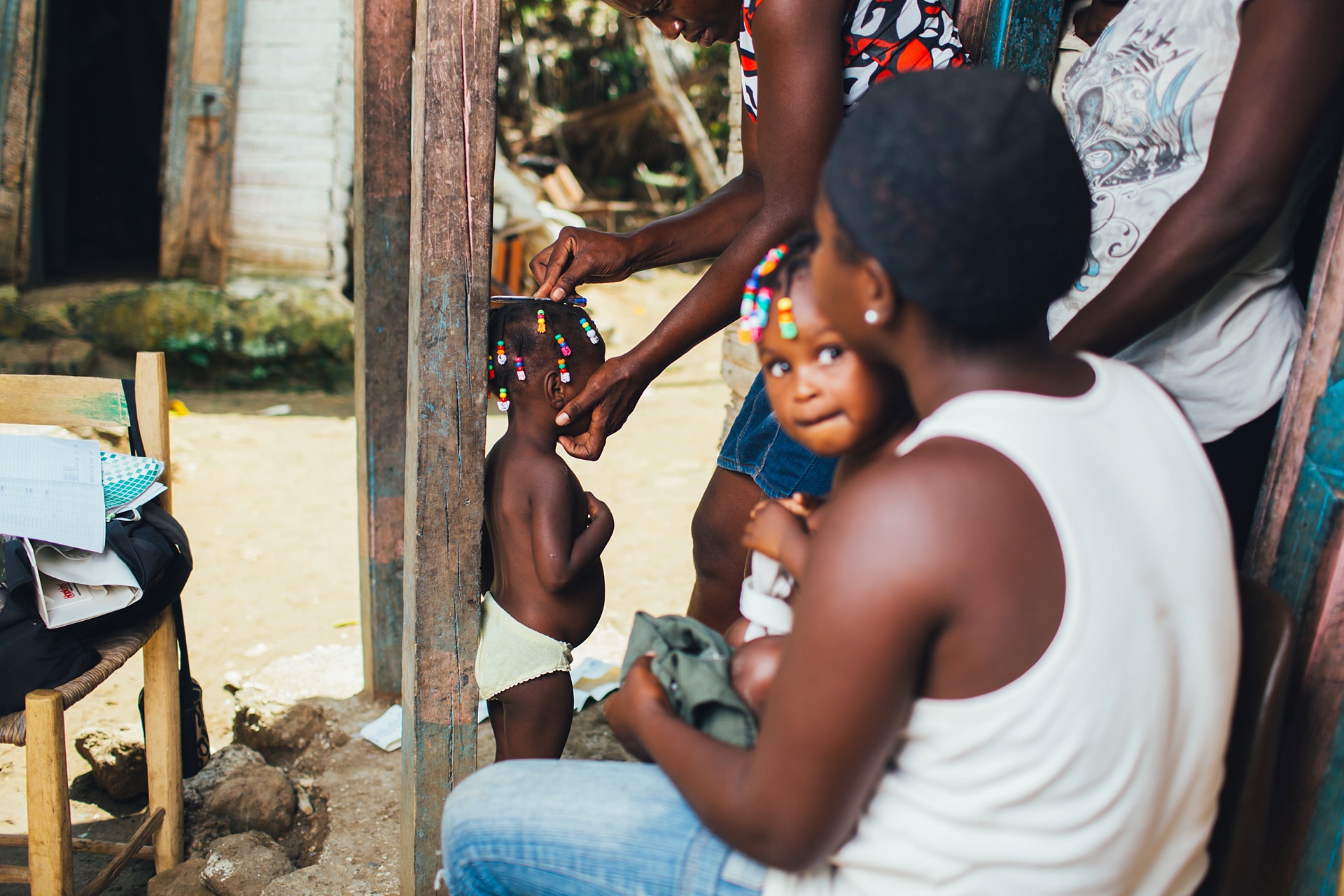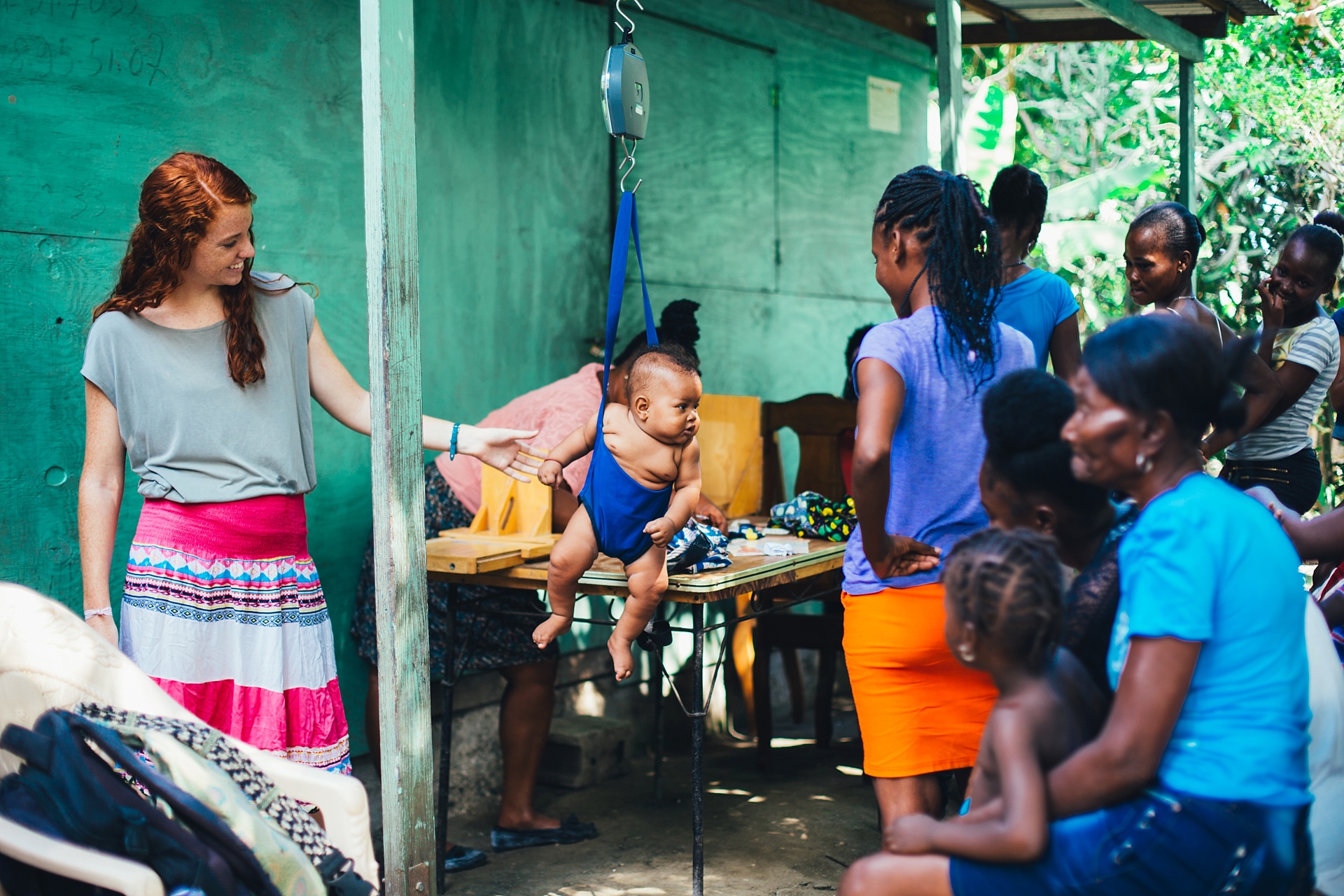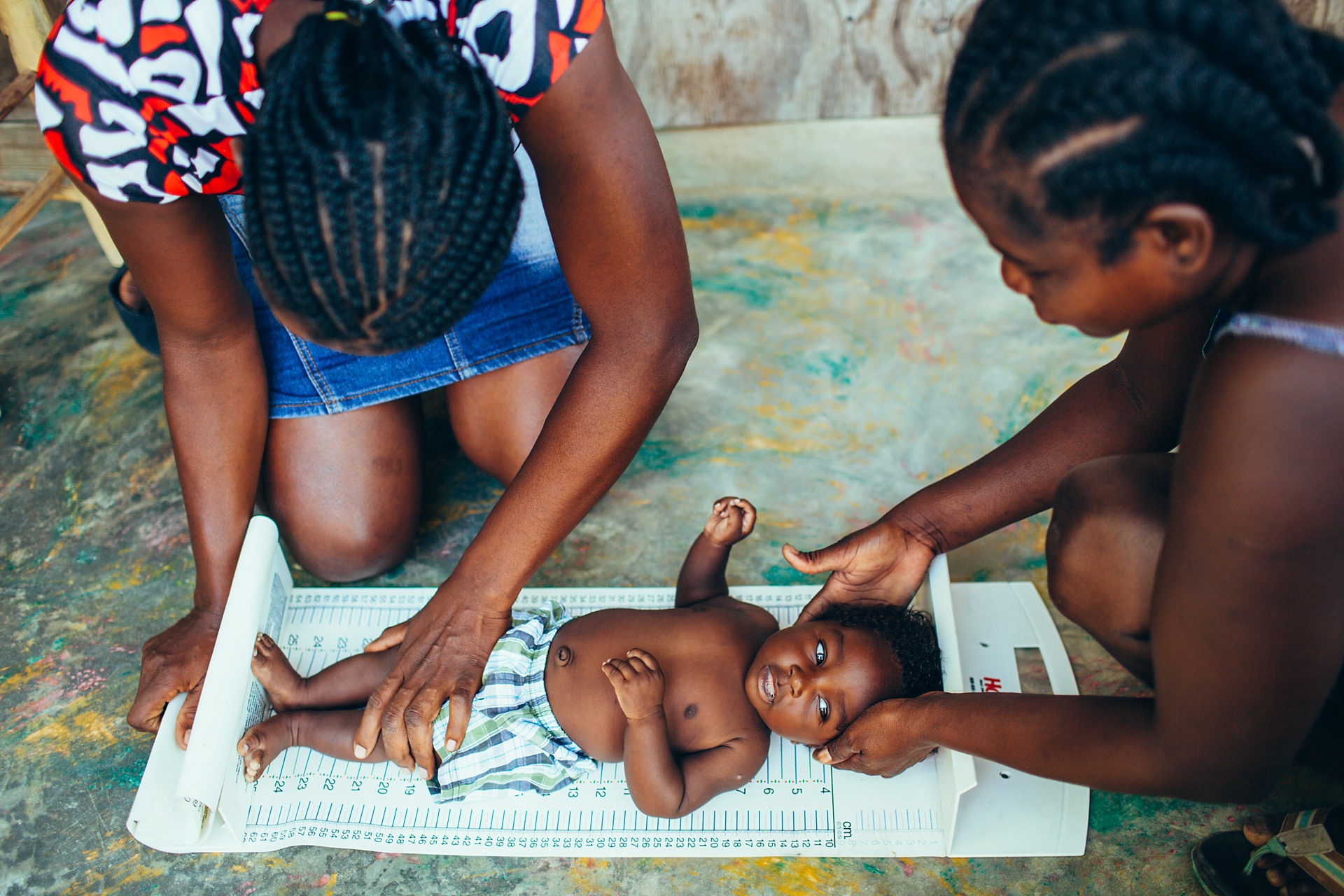
Growth Monitoring
Finding and treating child malnutrition
In Haiti's severely strained health system, where insecurity, transport costs, limited clinical capacity, and disrupted services keep many families from reaching facilities, CNP Haiti's community-based approach is not an add-on to clinic care; it is what makes care reachable. CNP Haiti's monitrices are often the first trusted point of contact for mothers, caregivers, and young children. During home visits and outreach, they screen children for acute malnutrition using mid-upper arm circumference (MUAC) and growth monitoring, recognize danger signs, and connect families to care far earlier than a clinic-only model would allow.
By bringing screening, referral, treatment follow-up, and caregiver counseling directly into households and mobile outreach points, monitrices reach children who might otherwise stay outside the formal health system, identifying malnutrition sooner and helping families sustain recovery. Children with moderate or severe acute malnutrition are treated at the fixed clinic in Léogâne, at outpatient clinics, and through mobile outreach, following MSPP protocols and using ready-to-use therapeutic food, nutritional supplements, and medical monitoring. Those with medical complications are referred for inpatient stabilization, then followed at home after discharge so recovery continues.
Growth monitoring and caregiver counseling
Routine growth monitoring serves not only to measure a child’s nutritional status, but to open a practical conversation with caregivers about feeding, hygiene, illness, and care-seeking. Counseling focuses on breastfeeding and age
appropriate complementary feeding, maternal nutrition, safe food preparation, hygiene, and responsive caregiving. This turns each screening contact into a prevention opportunity, helping families act before children deteriorate and reducing the household conditions that cause relapse.
Follow-up and continuity of care
Care does not stop at screening or referral. Monitrices track whether children reach clinics, whether caregivers return for scheduled visits, whether treatment is used correctly, and whether a child is gaining weight after care begins. When families miss appointments, monitrices follow up to understand barriers such as transport, insecurity, illness, displacement, or food shortages. This sustained, repeated contact closes the loop between households, clinics, and higher-level care, and is what turns clinical treatment into lasting recovery.